

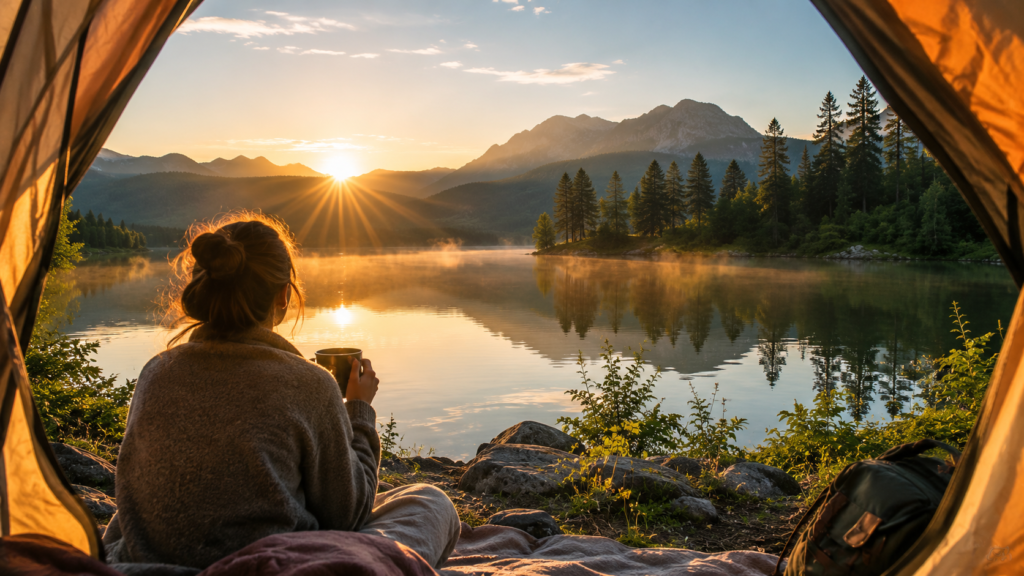
There’s a particular kind of morning that’s hard to explain to someone who hasn’t had it. No alarm. No notifications pulling at you before your eyes are even properly open. Just the sound of water somewhere nearby, birdsong filtering through a window, light that feels different from city light, softer and less insistent. You lie there for a moment and realize your body isn’t bracing for anything.
That morning exists. It’s just that most of us have stopped building our travel around the possibility of it.
The Way We Travel Has Drifted
Modern travel has quietly reorganized itself around stimulation. Packed itineraries, city-center hotels chosen for proximity to things, every hour accounted for in advance. There’s nothing wrong with that kind of trip. But if you come back from a vacation and need a few days to recover from it, it’s worth asking what the travel was actually for.
Nature-based travel, specifically the kind that puts you in slow, sustained contact with a natural environment rather than passing through one, operates on a completely different logic. The science behind it isn’t particularly new. Time in natural settings lowers cortisol levels, reduces blood pressure, and shifts the nervous system out of the low-grade vigilance that urban environments tend to sustain. But the lived experience of it is something the data doesn’t fully capture.
Waking up near water is its own category. There’s a reason people have built sanctuaries near lakes and rivers across every culture and every era. Moving water, natural light, the absence of synthetic noise. These things aren’t aesthetic choices. They’re physiological ones.
What Slowing Down Actually Does
The first day of a genuinely slow stay somewhere beautiful is often the hardest. The mind keeps reaching for things to do, problems to solve, messages to check. That restlessness isn’t weakness. It’s what chronic overstimulation looks like when it finally meets stillness. The friction is real, and it usually passes by the second or third day, at which point something shifts.
Appetite normalizes. Sleep deepens without effort. Thoughts that felt urgent a week ago start losing their grip. The body, given the right environment and enough time, begins to do what it was always trying to do: recover.
This is the foundation of what Serenity Wellness was built on. Nestled in Kuruwita, Ratnapura, in the lush, forested interior of Sri Lanka, the retreat sits within a natural environment that does a significant portion of the healing work before any program begins. The surrounding forest, the wildlife, the quality of air and light and sound. These aren’t backdrop. They’re part of the treatment.
Nature as an Active Ingredient
There’s a tendency to treat natural surroundings as the pleasant packaging around a wellness program rather than a core component of it. That’s a mistake. Ayurvedic philosophy, which underpins everything at Serenity Wellness, has always understood the environment as inseparable from the healing process. Where you are shapes what’s possible for your body and mind. A clinical intervention in a stressful environment produces different results than the same intervention in a place that’s actively supporting rest.
The forests around Ratnapura are genuinely extraordinary. Sri Lanka’s biodiversity in this region is among the richest on the island, and the combination of forest sounds, clean air, and the kind of natural light that changes slowly through the day creates an environment that continuously signals safety to the nervous system. That signal matters. The body can’t fully heal while it’s still on alert.
Waking up in that kind of setting, particularly after a few days of immersion, feels different from waking up at home. Not because the bed is more comfortable, though the accommodation at Serenity is considered and beautifully designed. But because the environment itself is no longer asking anything of you.
The Relationship Between Place and Program
What makes nature-immersive wellness travel different from a spa weekend is duration and intention. A two-night stay at a nice hotel with a massage is pleasant. It’s not transformative. The body doesn’t have enough time to move through the initial resistance and arrive at something deeper.
The programs at Serenity Wellness are built around longer stays precisely because of this. Seven days at minimum, with many guests staying considerably longer depending on their program. Panchakarma detox, stress and burnout recovery, immunity and rejuvenation, each program is doctor-guided and individually formulated. But the natural environment surrounding all of them is a constant, working in the background of every meal, every treatment, every morning.
What You Actually Take Home
The lasting value of a nature-based wellness stay isn’t purely what happens during it. It’s the recalibration. People leave with a clearer sense of what their baseline feels like when it isn’t being constantly eroded. That reference point becomes something to return to, not just in the memory of the trip, but in the daily choices that follow it.
That morning by the water, the one with no alarm and no bracing and light that asks nothing of you, turns out to have a longer half-life than most things you can do for your health.
It’s worth traveling for.
